After eight days at sea, the SEINE 2026 Mission concluded on 29 September, following an intensive scientific expedition to the Seine Seamount. Bringing together researchers, innovative monitoring technologies and Madeira’s fishing community, the mission represents an important first step in a broader scientific effort to better understand and protect Madeira’s ocean, ahead of a larger Madeira Ocean expedition taking place in October.
From 22 to 29 September 2026, the SEAMPHONI project headed offshore to investigate one of Madeira’s remarkable but still relatively understudied marine environments: the Seine Seamount, located around 110 nautical miles northeast of Porto Santo.
Part of the Madeira–Tore complex, the area has been recognised since 2022 as an Ecologically or Biologically Significant Marine Area and is included in the proposed Dom Carlos Marine Protected Area.
The expedition formed part of the Madeira Ocean scientific campaign while contributing directly to SEAMPHONI – Strengthening Ecosystem-based Assessment and Monitoring for Protected Habitats in Offshore Areas and Newly Identified MPAs, funded under the European Union’s Horizon Europe programme.
With the mission now completed, the scientific work continues on land, as the samples, images, acoustic recordings and other information gathered during the expedition begin to be processed and analysed.
Exploring a hidden offshore ecosystem
Rising from the abyssal plain, the Seine Seamount is an impressive underwater feature. Its central area reaches depths of over 400 metres, while its slopes descend steeply to 2,000 metres and eventually reach the surrounding abyssal plain. The seamount also serves as a fishing ground for demersal species, black scabbardfish, and, seasonally, tuna.
Understanding ecosystems such as this one is challenging. Monitoring offshore biodiversity traditionally depends heavily on research vessels, making repeated observations of remote areas costly and difficult.
SEAMPHONI is working to address this challenge by combining environmental DNA (eDNA), acoustic monitoring and underwater imaging to develop innovative and more cost-effective approaches for observing marine biodiversity. Together, these technologies will contribute to an Intelligent Marine Digital Twin, designed to make offshore biodiversity information more accessible and useful to scientists, policymakers, Marine Protected Area managers and citizens.
The SEINE 2026 Mission provided an important opportunity to put several of these approaches into practice in a real offshore environment.
Seeing, listening and detecting life at Seine Seamount
During the expedition, the scientific team combined several complementary methods to build a more complete picture of biodiversity around the seamount.
Environmental DNA was collected to help detect species from the genetic traces they leave behind in the water, while two hydrophones were deployed together to support acoustic monitoring of marine life and underwater activity.
The mission also incorporated Baited Remote Underwater Video systems (BRUVs). These non-extractive systems use underwater cameras and bait to observe fish communities without relying on fishing catches, providing information on diversity, relative abundance, community structure and behaviour.
Another important eye beneath the surface was the Azor Driftcam, an underwater camera system capable of operating at depths of up to 1,000 metres. The images gathered with this technology are intended to support the identification of benthic species, assessment of species richness and characterisation of habitats, including potential Vulnerable Marine Ecosystems.
The mission also included work on larval colonisation and biofouling, with structures designed to remain underwater for approximately one year before being recovered. The future analysis of the organisms colonising these structures will provide another window into the ecological communities associated with the seamount.
Sampling was also planned to characterise benthic crustacean megafauna, adding another layer to the biodiversity information gathered from the area.
Together, these approaches allow scientists to investigate the ecosystem from several perspectives, from genetic traces and underwater sounds to fish communities, seabed habitats and marine organisms.
Science and the fishing community working at sea together
One of the distinctive aspects of SEINE 2026 was not only what was studied, but also how the research was carried out.
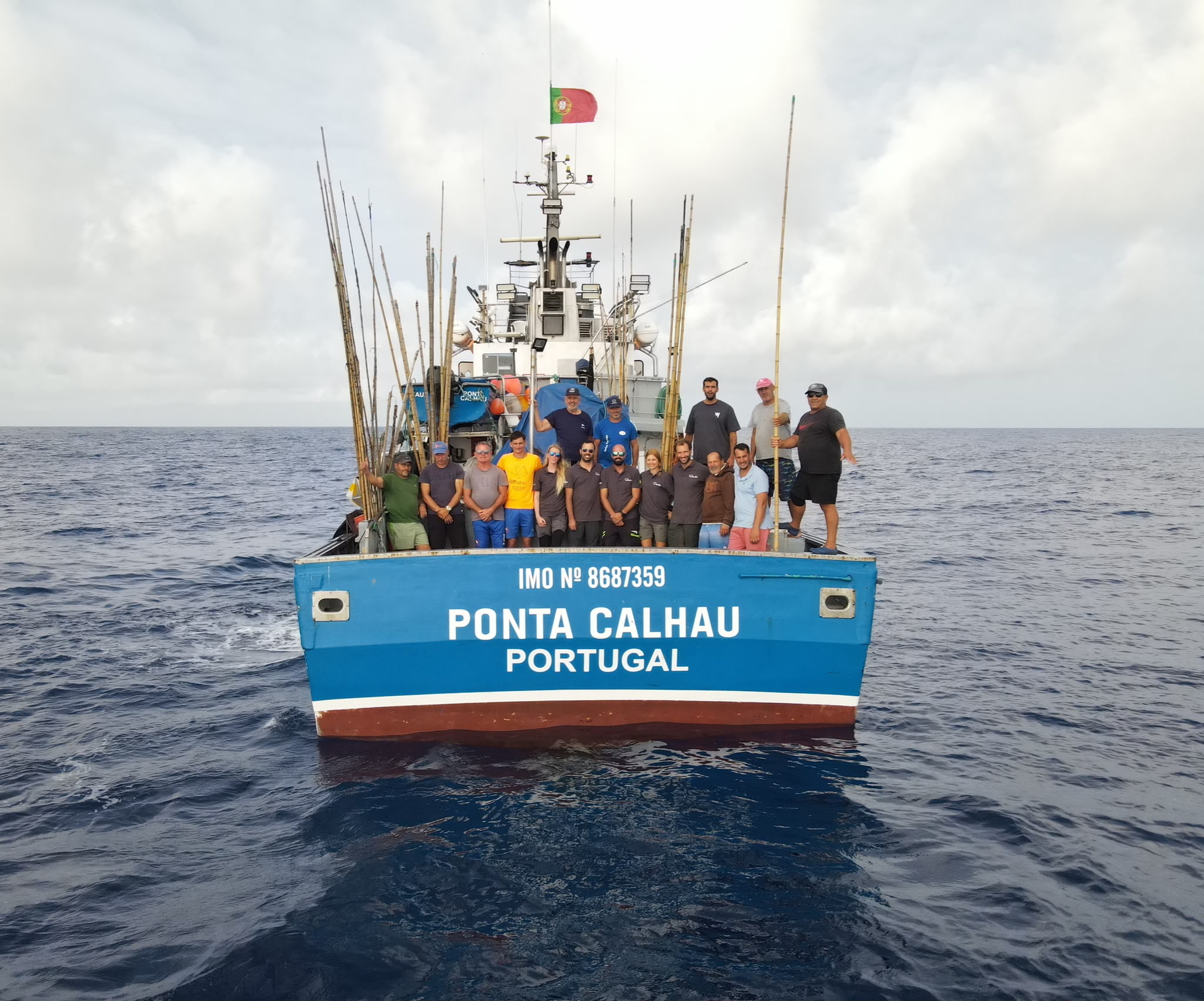
Rather than using a dedicated research vessel, the mission took place aboard the Ponta Calhau, a 26-metre professional tuna fishing vessel from Madeira, demonstrating the potential of a lower-cost approach to offshore marine research.
This collaboration also brought science closer to those whose professional lives are directly connected to the sea. The mission plan included collecting testimonies from crew members about their professional and emotional relationship with the ocean, while scientific operations were recorded for the Oceano Azul Foundation’s Madeira Ocean Expedition 2026 documentary.
The eight-person scientific team brought together expertise from MARE-ARDITI, IMAR, the Oceanic Observatory of Madeira (OOM), the Madeira Whale Museum (MMF) and Oceano Azul Foundation/Way Productions, under the leadership of Manuel Biscoito.
SEINE 2026 is only the beginning
Although the Ponta Calhau has now returned from the SEINE 2026 Mission, this is only the first stage of a much bigger journey.
The expedition connects with the broader Madeira Ocean programme, which brings together organisations with different expertise, knowledge and responsibilities around a shared ambition: to strengthen the protection of Madeira’s marine environment through science, collaboration and long-term commitment.
Promoted by the Government of the Autonomous Region of Madeira, Oceano Azul Foundation, ARDITI and National Geographic Pristine Seas, Madeira Ocean aims to support the assessment, management and strengthening of Madeira’s Marine Protected Areas, placing scientific evidence and collaboration at the heart of marine conservation.
Scientific expeditions planned for 2026 and 2027 will bring together scientists, institutions and communities to deepen knowledge of Madeira’s marine ecosystems, generate evidence to support conservation decisions, promote ocean literacy and contribute to a sustainable blue economy.
With SEINE 2026 now completed, attention will turn to the larger Madeira Ocean scientific expedition planned for October, continuing this collaborative effort to explore and understand the region’s marine biodiversity.
From exploration to long-term protection
For SEAMPHONI, the importance of SEINE 2026 extends beyond the eight days spent at sea.
The project aims to establish better biodiversity baselines for offshore environments, support continuous monitoring and ultimately provide scientific information that can help identify areas requiring protection and assess the effectiveness of marine conservation measures.
The samples and observations collected during the mission will now enter the next phase: analysis and interpretation. The results will contribute to a better understanding of Seine Seamount and to SEAMPHONI’s wider ambition to make Europe’s remote offshore ecosystems more visible, measurable and accessible.
SEINE 2026 may have returned to port, but the scientific journey has only just begun.
From the depths of Seine Seamount to the wider Madeira Ocean expedition ahead, each new observation adds another piece to the picture of an ocean that still holds much to discover — and provides knowledge that can help support its protection for the future.